Global container shipping continues to set all-time volume records, yet freight rates remain elevated. As ocean carriers evaluate alternative transport corridors, air cargo operators expand dedicated freighter fleets and major conglomerates consolidate multimodal infrastructure and AI technologies. The global logistics industry is entering an era defined by volume growth alongside cost pressures and operational adaptation.
1. Global Container Trade Sets New Record, Freight Rates Remain High
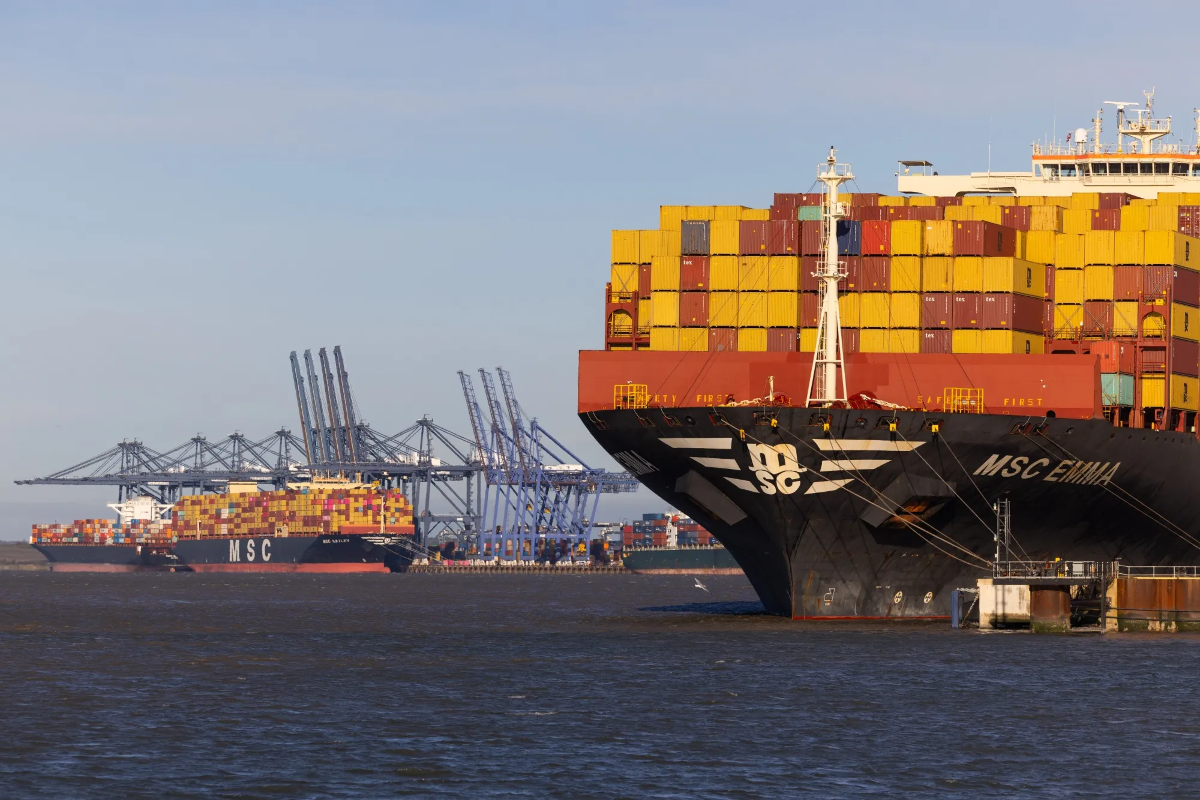
According to Container Trades Statistics (CTS) figures released on October 8, 2026, global sea container volume in August reached 17.46 million TEUs — the highest monthly throughput ever recorded in the CTS database, representing a 3.7% year-on-year increase.
CTS headlined this achievement as “Another Record Month for the CTS Database”.
Notably, surging volumes did not suppress freight rates. The global price index monitored by CTS reached 104 points in August, up 3 points from July and marking its peak since July 2024. Rate pressures stem from bunker fuel costs, regional geopolitical tensions, and ongoing carrier diversions around the Cape of Good Hope rather than Suez Canal transits.
Growth remains geographically uneven: through the first eight months of 2026, exports from Asia expanded 7.8% and North American imports grew 9.2%, whereas European imports rose a modest 1.4% and exports contracted 0.8%. Shippers must align booking strategies to specific trade lanes rather than global averages.
2. China–Europe Arctic Express Completes Eight Voyages
In maritime route diversification, Sea Legend Shipping completed eight voyages along the Northern Sea Route corridor during the 2026 navigational season.
Marine Insight reported on October 8, 2026, that the China–Europe Arctic Express handled approximately 19,000 TEUs, connecting Shanghai, Ningbo, and Qingdao with Russia's Saint Petersburg and Arkhangelsk. While the Arctic passage significantly cuts nautical distance during ice-free summer months, harsh seasonal conditions and early freezing require treated hull ratings and contingency routing.
3. Ethiopian Airlines Orders 10 Boeing Freighters
In air logistics, Ethiopian Airlines finalized an order for 10 Boeing freighter aircraft, comprising two 777Fs and eight next-generation 777-8Fs. With structural payload capacity reaching 118 metric tons on the 777-8F, Ethiopian becomes the premier African carrier to adopt this flagship air cargo platform, supporting expanding e-commerce, electronics, and pharmaceutical supply chains.
4. Maersk Implements VGM Certification at Port of Milazzo
Maersk announced it will offer Verified Gross Mass (VGM) certification services for eligible export containers at Milazzo, Italy, effective November 9, 2026, at a fee of 50 EUR per container. This emphasizes the continuous importance of regulatory compliance and ancillary terminal fee transparency in global logistics planning.
5. Rosatom Acquires Full Ownership of Delo Group
On October 7, 2026, Russian state corporation Rosatom completed its acquisition of the remaining 51% stake in Delo Group, securing complete control over the logistics conglomerate's network of container terminals, 220,000 TEU equipment fleet, and 40,000 railway flatcars to integrate with FESCO maritime operations.
6. Maritime AI & Air Cargo Records
On October 12, China Merchants Energy Shipping and classification society RINA signed a memorandum to advance AI applications in predictive maintenance, voyage energy optimization, and carbon footprint reduction. Concurrently, Global GSA Group and Turkish Cargo processed a record 3,101 tons of air cargo through the Netherlands in August.
Outlook for Late 2026: Growth Coupled with Adaptation
Current developments demonstrate that global logistics is expanding rapidly, but efficiency requires holistic supply chain management: balancing freight costs with scheduling resilience, local fee predictability, and trusted partnership.
In an unpredictable market, sustained competitive advantage belongs to enterprises that seamlessly orchestrate each link of their supply chain.